The Deluge
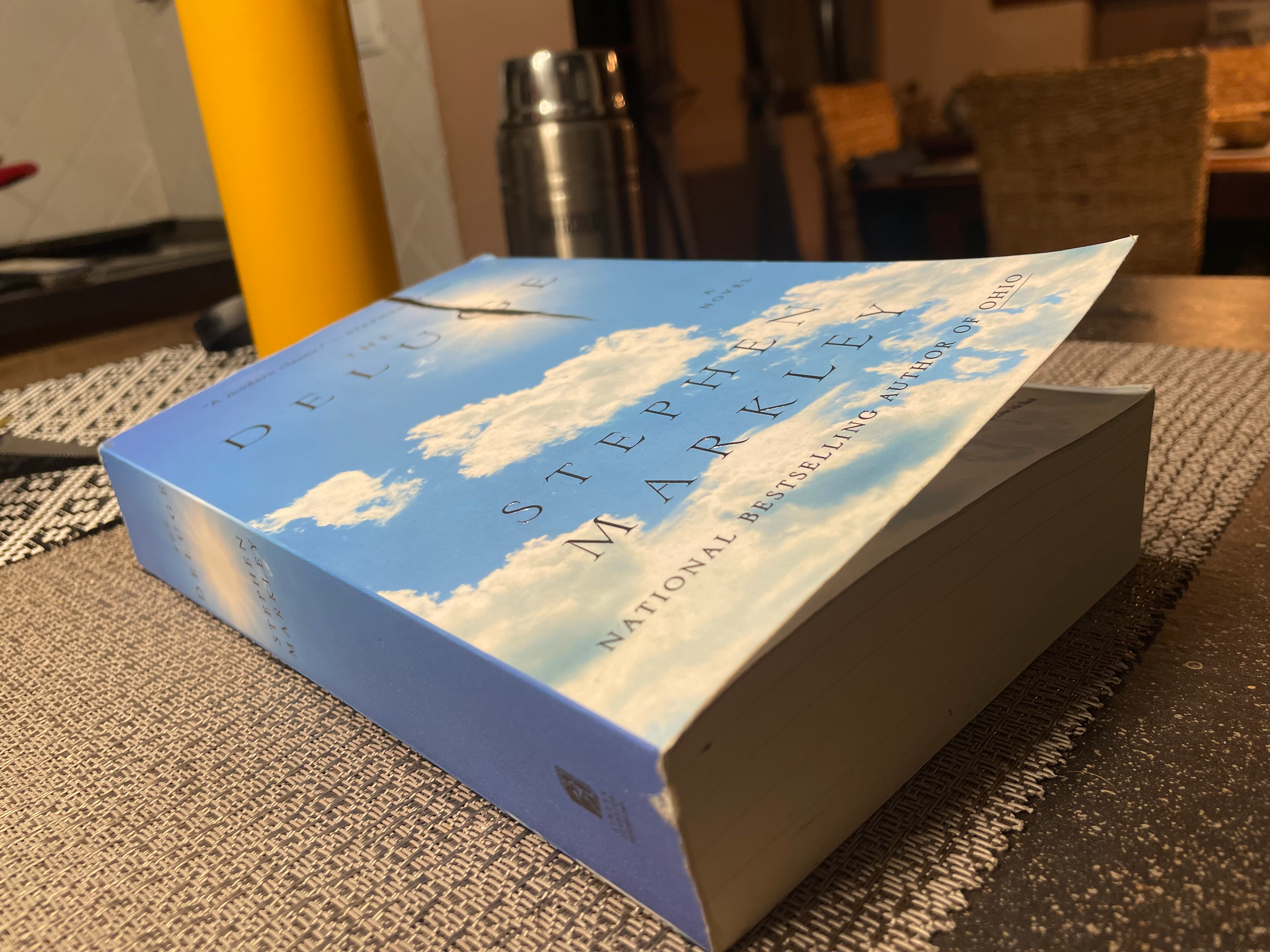
These days, I am feeling especially apocalyptic. Maybe it is because I am facing the huge contradiction of claiming that there should no longer be cars while driving a couple of hours per day. Maybe it’s because my latest read, The Deluge, by Stephen Markley, has got to my guts. Or simply because everything points to this year being just worse than ever. A drought emergency in Cataluña and the lack of ice in Madison’s lakes are a couple of very personal events. I would also add that spending two weeks in January at 15ºC is another thing that should make every reasonable human a little bit worried.
Carl Sagan spoke at a US Congress hearing about climate change. It’s a video that you can easily find on YouTube. With a very simple (but not simplistic) speech, he explained to everybody in the room that the generation of his grandchildren would face terrible consequences unless drastic actions were taken. We are his grandchildren’s generation, and no measures have been taken. The CO2 emissions haven’t peaked yet; we are facing an imminent 1.2ºC scenario with possible runaway effects, and the public still understands the current climate crisis as a mere series of meteorological issues with no correlation.
What should we do— apart from avoiding driving two hours per day? I think that the first step is ending denialism. But not only the denialism of those fools who affirm that climate change is a hoax. I talk about everyone who believes climate change is a real issue that will be solved eventually, thanks to some technological solution and last-minute political agreement to ban private jets.
A good example of what I mean could be techno-optimistic views on climate change. According to some deniers, we don’t need to undergo a dramatic change in our lives because some innovations will come along. Electric cars are the best example: instead of changing our infrastructure and lifestyle, we use private vehicles fed by electricity. The problem with this view is that all-important changes and decisions are indefinitely postponed, as we could always find a later optimal solution. Another issue is that innovation might never address the real issues without a clear incentive. Just this year I was reading about a company affirming to develop “sustainable supersonic flights”. Money might never be invested where we need to.
I enjoyed The Deluge. It’s been quite a long time since I have been so hooked on a book. Combined with the jet lag from crossing the Atlantic east-way, it has kept me awake until 4 am. The stories of very different characters (from scientists to fentanyl addicts) are told with a unique style that only employs stories inside the story. So far, it is my favorite climate-based fiction, beating even The Ministry of the Future by Kim Stanley Robinson.